



Nanman Screen - Kobe City Museum
It is a type of screen made in Japan from the late 16th century to the mid-17th century, mainly depicting scenes of communication with Portugal and Spain. This important cultural property created by Kano Uchiyama uses the technique of coloring gold on paper and consists of six pieces. It is currently collected at the Kobe City Museum. The creative background is closely related to Japan's foreign exchanges at that time. In the late 16th century, with the colonial expansion of Portugal and Spain in Asia, Western European countries began to enter Japan's trading circle, and the Japanese at that time referred to them as the "Southern Barbarians". From this work, we can see how Japanese people at that time understood and expressed their communication and interaction with foreign countries through art.
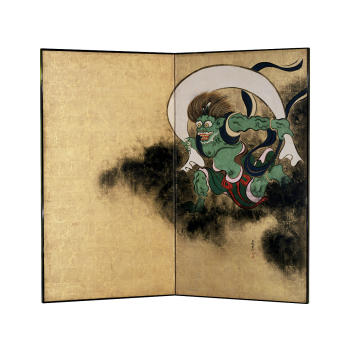
The Wind God and Thunder God Screen (Wind God Screen) - Tokyo National Museum
The "Wind God and Thunder God Screen" by Mitsuru Ogata is an important cultural property of the Edo period in the 18th century and is currently housed in the Tokyo National Museum. It was created by Mitsunari Ogata imitating the national treasure of Muneda Biaya. Using paper-based gold coloring techniques. One of the prominent features of this work is the intersection of the gaze of the Wind God and the Thunder God. The images of the Wind God and the Thunder God are vivid and powerful, with the Wind God holding a wind bag and the Thunder God holding a drum, both of which have dynamic movements and expressions. In addition, after the death of Mitsuhide, Sakai Takaichi added the "Summer Autumn Sketch Screen" to the back of the screen, but for preservation reasons, these two works are now stored separately in different screens.

Wind God and Thunder God Screen (Thunder God Screen) - Tokyo National Museum
The "Wind God and Thunder God Screen" by Mitsuru Ogata is an important cultural property of the Edo period in the 18th century and is currently housed in the Tokyo National Museum. It was created by Mitsunari Ogata imitating the national treasure of Muneda Biaya. Using paper-based gold coloring techniques. One of the prominent features of this work is the intersection of the gaze of the Wind God and the Thunder God. The images of the Wind God and the Thunder God are vivid and powerful, with the Wind God holding a wind bag and the Thunder God holding a drum, both of which have dynamic movements and expressions. In addition, after the death of Mitsuhide, Sakai Takaichi added the "Summer Autumn Sketch Screen" to the back of the screen, but for preservation reasons, these two works are now stored separately in different screens.

Popular Models
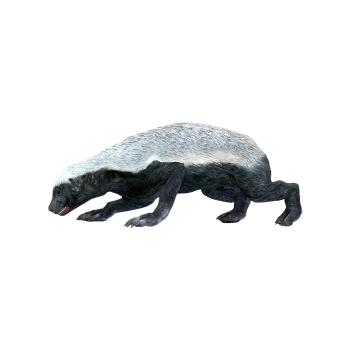
Honey Badger (3D animated model)
194 View
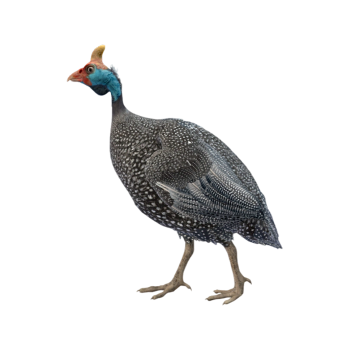
Guinea fowl (3D animated model)
165 View
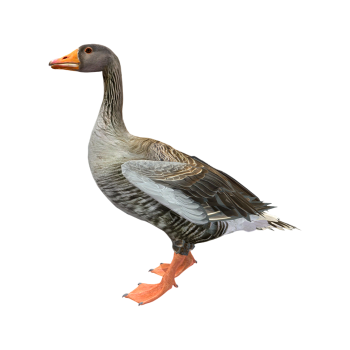
Wild Goose (3D animated model)
187 View
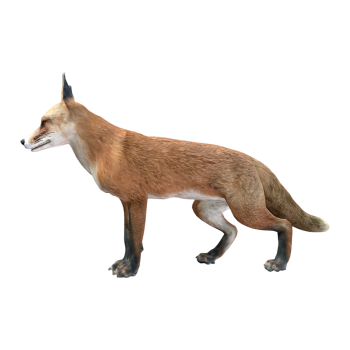
Red Fox (3D animated model)
155 View
Random Model


IPhone 5s Gold
740 View

Canadian French Community College
1123 View


Retro desktop electric fan
841 View


Manta Ray 3D Model Animation
1073 View